
Mark Arner, P.E.
Class: 1998
Project Engineer
C&S Engineers, Inc.
Mark leads transportation engineering projects including highway design, drainage systems, project management, and field inspections. He has also taught transportation engineering at SUNY Poly since 2010.
Read Full Story
Job Duties
As a transportation engineer and a licensed New York State Professional Engineer, I understand the importance of assuring that the foundation of any roadway or structure being designed will be capable of carrying the loads and forces that may be placed upon it over the course of its lifetime. As a 1998 graduate of the Civil Engineering Technology program at SUNY Poly, the foundation that I've needed to advance my career was well placed and continues to help me carry my workload every day. I am a senior project engineer at C&S Engineers, Inc. in Syracuse, N.Y., and my tasks have included designing horizontal and vertical highway alignments and drainage systems, estimating project costs, field inspection work, and managing projects. Since 2010, I have had the honor of helping guide the next generation of civil engineers as an adjunct instructor at my alma mater, teaching various transportation courses and a senior capstone class where the students team up on a semester-long design project.
How did SUNY Poly prepare you?
One of the main goals I carry into each class is to impart the same enthusiasm and optimism for this career field that I got at SUNY Poly because the opportunities that this degree can provide are unlimited.
Anthony Roach
Class: 2018
Assistant Engineer
New York State Department of Transportation - NYSDOT
As assistant engineer to multiple DOT Construction Supervisors, I integrate 3D information via CADD models and GPS unit data to provide clear understanding of as-built and proposed highway and bridge elements.
Read Full Story
Job Duties
As assistant engineer to multiple DOT Construction Supervisors, I integrate 3D information via CADD models and GPS unit data to provide clear understanding of as-built and proposed highway and bridge elements. Model-Based-Contracting is morphing into my field of expertise as construction projects of all types are increasingly being built using 3D models, smart shapes, and comprehensive components. Construction projects will need very little if any paper plans and specifications in the future as every element drawn into a model can be categorized and smart-labeled. Material types, item numbers, and specification information embedded with quantity workups are at the ready to be modified by field staff with a near real-time update to the model.
How did SUNY Poly prepare you?
The requirements of the CET program at SUNY Poly are rigorous and substantial, but completely doable and fruitful for those seeking to not just pass along each course. Professors in the CET program and other interdisciplinary courses are tough, yet accommodating to the students. Professors here seem to have a higher purpose in mind for their students and don’t just try to push them along in the programs. If you’re not a hardworking student before you get to SUNY Poly, and if you persevere, you will be by the time you graduate. The best thing about the CET program that I experienced was the camaraderie and work ethic of your fellow peers and the professors.
Dan Wheeler, EIT
Class: 2017
Ready Mix Operations Manager
Callanan Industries, Inc.
Upon graduating in spring 2017, I was hired by Callanan/Clemente as assistant quality control manager.
Read Full Story
Job Duties
Upon graduating in spring 2017, I was hired by Callanan/Clemente as assistant quality control manager. During this time, I became ACI and HMA certified. Performing mix submittals, trialing RMC and HMA mix designs, as well as monitoring daily production quality, were my daily tasks. Six months into my time at Callanan, I was designing and laying out RMC plant projects and consulting with engineers to obtain permits to expand. After passing my EIT, I was promoted to RMC operations manager and currently oversee the quality control department for RMC as well as plant production and repairs.
How did SUNY Poly prepare you?
My education gave me the solid foundation required, making the transition to the real world as easy as possible.
Rene Adames
Class: 2017
Project Manager
LeCesse Construction
I am currently a project manager for two renovation projects in New Jersey.
Read Full Story
Job Duties
I am currently a project manager for two renovation projects in New Jersey. One of the projects is a $17 million renovation in West Orange, N.J., and the other is a $10 million renovation in South Orange, N.J. My tasks as a project manager for these two projects consists of quite a bit as our budget did not allow for a Project Engineer, or an Assistant PM to assist with the daily tasks. My normal tasks include, but are not limited to:
- Create a baseline schedule and maintain an updated true impact schedule on the monthly progression of the project
- Create and execute subcontracts.
- Run owner architect/general/contractor meetings
- Execute change management
- Execute monthly requisitions
- Manage construction documents—this includes updating specifications, updating drawings, submitting product submittals, submitting project RFIs, etc.
How did SUNY Poly prepare you?
I feel that during my time at SUNY Poly, I got a great sense as to how these three groups work together to accomplish the end goal. In addition to seeing how the whole construction industry works, it was a huge help to study structural engineering. Seeing the engineering side of things helped me understand the importance having an Engineer on Record (EOR) on a project and why it is important to keep them on your good side. There are times when you need a reply to an RFI or submittal overnight before the issue becomes a problem to the schedule.
Alexander Turner
Class: 2017
Planning Specialist
SUNY Poly
In my position, I serve as the campus liaison between the State University Construction Fund (SUCF), contractors, design consultants, special testing agencies, and campus departments for the design and construction of projects.
Read Full Story
Job Duties
In my position, I serve as the campus liaison between the State University Construction Fund (SUCF), contractors, design consultants, special testing agencies, and campus departments for the design and construction of projects. I monitor the quality of projects and ensure that the work is completed according to the contract documents, schedule, and budget. In my role, I identify the need and funding for projects on campus to ensure that SUNY Poly is operating at its best for the students. In addition to my primary role, I am also an adjunct lecturer in the Civil Engineering Technology program teaching courses related to the transportation field.
How did SUNY Poly prepare you?
My degree from SUNY Poly helped by providing a solid foundation of technical knowledge and valuable soft skills. My background in engineering technology is a valuable asset to the campus, and I play an important and gainful part in its mission. Being able to work at the same institution I graduated from has been rewarding as I get to play a role in keeping the same high standards that SUNY Poly had when I was a student while also bringing a unique perspective.
Leah Segerlin, EIT
Class: 2017
Senior Consultant, Aviation Engineering
WSP
In my current role, I lead the design and delivery of aviation infrastructure projects, working with multidisciplinary teams to improve runways, taxiways, aprons, terminals, airfield lighting, and hangar facilities at airports across the country.
Read Full Story
Job Duties
I am a Senior Consultant in Aviation Engineering, where I lead the planning, design, and delivery of airport infrastructure projects that support the safe and efficient movement of people and goods. My work spans both airside and landside systems, including runways, taxiways, aprons, terminals, utilities, and airfield lighting. I enjoy collaborating with airport owners, regulatory agencies, contractors, and multidisciplinary teams to develop solutions that improve airport operations and position facilities for future growth.
In my current role, I serve as Deputy Project Manager on major airport capital improvement programs. I help guide projects from concept through construction by balancing technical requirements with project budgets, schedules, and funding constraints. A significant part of my work involves coordinating with clients, contractors, and internal teams to facilitate decision-making, manage risks, and keep complex projects moving forward.
My technical experience includes airfield geometry, pavement design, drainage systems, and airfield visual aids, with a focus on delivering solutions that meet FAA, state, and local requirements. Beyond project delivery, I contribute to business development efforts through proposal preparation, scope development, and client engagement. What I enjoy most about aviation engineering is the opportunity to help shape infrastructure that connects communities, supports economic growth, and creates lasting impacts for the traveling public.
Jay Deschambeau
Class: 2019
Engineer I
Lochner, an Egis Company
In my current role as an Engineer I, I serve as an Inspection Team Leader and office engineer performing Complex, Routine, and Fracture Critical Inspections along with various design/load rating calculations serving as a mentor to junior staff to help provide guidance as they navigate their young career.
Read Full Story
Job Duties
In my current role as an Engineer I, I serve as an Inspection Team Leader and office engineer performing Complex, Routine, and Fracture Critical Inspections along with various design/load rating calculations serving as a mentor to junior staff to help provide guidance as they navigate their young career. I predominantly perform work as a mentor for those that would like to be involved with bridge load ratings and bridge inspection. However, more recently I have been involved in the design side of things to complete the bridge-trifecta. My job includes the evaluation and analysis of everything from simple span bridge structures such as culverts or slabs to high-profile bridges such as girder-floorbeam-stringer systems and suspension bridges in the New England area.
As an Inspection Team Leader I am responsible for maintaining and ensuring the federal and state requirements of our nation’s bridges are upheld. I convey the importance, and impact of, this responsibility to junior staff every time we are out in the field to ensure that safety is held in very high regard. As inspectors we must maintain a high degree of accuracy that all deficiencies are properly documented, reported, and accounted for once back in the office.
Performing bridge load ratings and design, I have done complex Finite Element Analysis of steel structures, quadruple intersecting multi-line Truss Analysis, Gusset Plate Ratings, and tunnel ratings for clients such as MassDOT, RIDOT, and VTrans. Here, we take the information from the field during inspection and integrate that information obtained into our computer models and hand calculations to produce rating factors and bridge postings you may see driving down the road today. Analysis software can consist of the use of anything from STAAD, AASHTOWare BrR, MIDAS, and Bently OpenBridge. Rating methodologies may include Allowable Stress Design, Load Factor Design, and Load and Resistance Factor Design.
How did SUNY Poly prepare you?
SUNY Poly’s program was great in the sense that it allows students to find what they could be passionate about and encourages individuals to take that path. There are several emphases that one can choose from (Structural, Transportation, Construction, and Geotechnical, these allow students to get a better understanding of what the future may hold for them. The program also encourages students to stay disciplined and complete work and projects on time with a very similar feel to the QAQC process of the “real” engineering world, I found this to be incredibly helpful. Overall, I could not recommend the program enough as the professors really care about each and every student and really push for their success. SUNY Poly helped to shape me into the person that I am today and helped me to secure a job right out of college. Additionally, the program has amazing resources when it comes to passing the FE and PE exams! Small class sizes, hands-on field trips, and professors that have real world experience (and really care!) are some of the best reasons to join this program.
Daniel Rivie
Class: 2019
Bridge Inspector
WSP
As a bridge inspector, we go out to inspect components of bridges and gather the information needed to complete a Bridge Inspection Report.
Read Full Story
Job Duties
As a bridge inspector, we go out to inspect components of bridges and gather the information needed to complete a Bridge Inspection Report. This report is created from the field work conducted, checked by quality control, and sent to the client for use.
How did SUNY Poly prepare you?
SUNY Polytechnic Institute provided me with the necessary tools to take part in this job opportunity and be successful here at WSP. More specifically, the Civil Engineering Technology (CET) Department allowed me to thrive while obtaining my degree. Additionally, the CET Department has always pushed us to further our studies after we had graduated, whether that be by obtaining the F.E., getting a P.E. license, or completing a master’s degree. With the guidance of many professors with P.E. credentials in the CET Department, it has helped us to see what continuing education can accomplish. The hands-on classes and various field trips that we went on demonstrated real-world examples of engineering into the classroom. Smaller class sizes and committed professors provided a personal and enhanced learning experience that made my four years exciting and enjoyable. A Civil Engineering Technology degree at SUNY Polytechnic Institute will open doors that you didn’t even know were there!
Benjamin Taylor
Class: 2019
Structural Engineering Technician
Zangrilli Engineering
Every single day I use the engineering techniques I learned at SUNY Poly in the workplace, but SUNY Poly did not only prepare me academically—SUNY Poly prepared me for the workforce as well.
Read Full Story
Job Duties
Every single day I use the engineering techniques I learned at SUNY Poly in the workplace, but SUNY Poly did not only prepare me academically—SUNY Poly prepared me for the workforce as well.
How did SUNY Poly prepare you?
While in college I learned to keep a good schedule, prioritize, and to be a diligent worker. Those skills have allowed me to secure an engineering job and be successful in the workplace. One specific skill I was able to refine was working with others. In the beginning of my time at SUNY Poly, I always worked by myself but, as time went on, I was able to work well with other students as well as my professors–especially professor Mattson. Upon my graduation I was able to be not only a person with head knowledge, but I also became a professional with the skills to succeed.
Patrick Bourdeau
Class: 2019
Engineer I
260 Structural Engineering
I am currently assisting with the design of the steel, concrete, and wood structure of commercial buildings within my engineering firm.
Read Full Story
Job Duties
I am currently assisting with the design of the steel, concrete, and wood structure of commercial buildings within my engineering firm. A lot of what I learned in my design classes has given me the building blocks of the methods I use every day at work with how they apply to each exercise.
How did SUNY Poly prepare you?
I highly recommend SUNY Poly as an engineering school because of the faculty. Their real-world experiences give a different insight to exercises that reading out of a book won’t give you. Their motivation for each and every student to succeed was also a shining point in the program for myself. I look forward to see how my experiences at SUNY Poly will help me in my future endeavors.
Giovanni Randazzo, EIT
Class: 2024
Engineer I
Barton & Loguidice
As an entry level transportation engineer, my job tasks vary extensively from CAD modeling, construction inspection, and design calculations.
Read Full Story
Job Duties
As an entry level transportation engineer, my job tasks vary extensively from CAD modeling, construction inspection, and design calculations. I primarily focus on the structural side of the transportation industry. I am assigned a bridge, culvert, dam or retaining wall project and take it from the initial funding phase and follow the project all way to final construction. This involves extensive coordination with the owner of the structure, utility providers, NYSDOT, and other state and federal agencies. Additionally, a lot of my work involves extensive design calculations and CAD modeling to ensure the proposed structure will meet all state and federal requirements while I complete cost estimates to verify the solution is the most cost-effective structure type. Finally, I work with contractors during construction to make sure our plans are brought to reality.
How did SUNY Poly prepare you?
The Civil Engineering Technology (CET) Department gave me many tools to thrive in the Civil Engineering industry. The CET program’s focus on applying real-world examples and practices in an interactive and cooperative manner has been immensely valuable in starting my career. Many of the CAD programs I used during my time in the CET program, I still use for my current position and allowed me to have a great foundation once I entered the workforce. Additionally, the real-world perspective and focus on collective collaboration used while teaching complex engineering topics has been instrumental in preparing me for the FE exam and to adapt and learn additional concepts that I have been introduced to since starting my engineering career. The Civil Engineering Technology Degree at SUNY Polytechnic Institute will prepare you to solve any problems you will face and will allow anyone to leave a lasting positive impact on their communities.
Chris Misiaczek, P.E.
Class: 2016
Lead Structural Engineer
National Grid
I’m a structural engineer and licensed Professional Engineer in New York, working at National Grid.
Read Full Story
Matthew McCord
Class: 2024
Assistant Engineer
New York State Department of Transportation - NYSDOT
In my position as an Assistant Engineer in Traffic Control, I assume many responsibilities related to the safety and overall condition of the extensive state highway system of Long Island.
Read Full Story
Job Duties
In my position as an Assistant Engineer in Traffic Control, I assume many responsibilities related to the safety and overall condition of the extensive state highway system of Long Island. One of my most important tasks includes plotting crashes using a specialized software to help visualize patterns and identify risk factors. I also gather data pertaining to motorists’ behaviors through speed studies, vehicle delay studies, and movement counts, which are used to determine the necessity of certain control devices like traffic signals and crosswalks. Occasionally, it’s required that I create new and/or edit existing traffic regulations like speed limits, parking zones, and turning restrictions, as well as create work requests to install and remove road signs. Once all the necessary data and analyses are compiled, we are able to make decisions that will best suit the conditions of the project at hand.
How did SUNY Poly prepare you?
Some of the most valuable things I was able to take away from SUNY Poly’s CET program were the skills and knowledge needed to pass the FE exam. That milestone has been and will continue to be a crucial part in my ability to progress through my career as an engineer. Through the coursework, I was able to gain an in depth understanding of various disciplines that could be valuable in the future. Apart from the technical skills, the program taught me how to be more professional and more efficient in my work by requiring group project participation and complex problem solving. Part of being a student in a challenging program is being forced to learn how to manage time more effectively and to not be afraid to ask for guidance, which are underrated skills in the workforce. I definitely would not be in the position I’m in today without this program.
Michael Mattioli
Class: 2026
Assistant Engineer
New York State Department of Transportation - NYSDOT
Upon graduating in May 2026, I chose to continue my career with the New York State Department of Transportation as a construction inspector in Region 11, New York City.
Read Full Story
Job Duties
Upon graduating in May 2026, I chose to continue my career with the New York State Department of Transportation as a construction inspector in Region 11, New York City. I had interned here during previous summers and enjoyed the job so much I decided it was a comfortable fit to start my full-time career with as a new graduate. Just 2 weeks after graduating, I passed my FE Civil exam and earned this certificate which upgraded my title to Assistant Engineer. My responsibilities included observing job sites while working alongside contractors, keeping track of labor, equipment and materials daily, and testing concrete and performing quality inspections for paint and steel. It is a job that has given me the opportunity to see different things every shift, always keeping my work fresh, and working both days and nights with other inspectors who help make the job more interesting through shared experience and ideas.
How did SUNY Poly prepare you?
I feel that the CET program was built around making sure students were well versed in all areas of civil engineering, including allowing students to pick an emphasis while also being required to take courses in various topics including construction, structures, wastewater, geotechnical, and surveying. I credit this well-rounded program to why I was able to study for my FE so effectively and pass it right after graduating since I was set up so well by the tools that were offered to me by my professors. On top of having high work ethic, my relationship with my professors were a huge impact on improving my education and helping push me towards achieving higher goals for myself after receiving my degree.
Tahseen Wiqar
Class: 2021
Principal Engineer Technician
New York State Department of Transportation - NYSDOT
As a transfer student from an International College in Pakistan, SUNY Polytechnic Institute recognized my associates degree in Civil Engineering Technology and gave me the credits that transferred.
Read Full Story
Job Duties
- Collaborate with Engineers, Assistant Engineers, Cartographers, and Surveyors to create
- Right of Way plans, Abstract Request Maps, Supplemental Abstract Request Maps,
- Acquisition maps, and any required documents for the right-of-way department.
- Conduct research on tax maps and deeds for state projects to gather information on owners' land.
- Coordinate with Surveyors to locate Ties, Surveyor marks, and establish highway boundaries on plans and maps.
- Attend monthly meetings to provide progress updates on projects.
How did SUNY Poly prepare you?
As a transfer student from an International College in Pakistan, SUNY Polytechnic Institute recognized my associates degree in Civil Engineering Technology and gave me the credits that transferred. This led me to pursuing my bachelor's degree in Civil Engineering Technology.
During my years in SUNY Polytechnic Institute, I got the opportunity to network with a lot of people which I still keep in contact til this day. It's funny cause it was Covid and we were in lockdown but somehow it all worked out. Mark Mattson, Andrew Wolfe, Jayne Baran and Mark Arner are the few Professors I would like to mention. Mark Medici and William Curtis Nichols are a few people I would like to honorable mention. After my bachelor's degree Mark Mattson started his FE review on YouTube and would do live sessions and have those recordings. This really not only helped me but a majority of my colleagues as well. I'm proud to be one of his students and it's an honor to meet him in person as well.
I was the Chief Designer in my Capstone thanks to Professor W. Curtis Nichols which helped me to manage, organize, supervise sets of plan sheets. It also gave me the opportunity to be able to problem solve issues and use my critical thinking skills when it came to designing. This later helped me in my Professional Career working with other Engineers, Planners, Surveyors and Project Managers when it came to using my skill set.
John Muthersbaugh
Class: 2021
Assistant Engineer
New York State Department of Environmental Conservation - NYSDEC
Within a month after earning his Bachelor of Science in Civil Engineering Technology (CvET) from SUNY Polytechnic Institute, John began employment as a Staff Engineer with Enman Kesselring Consulting Engineers in Rutland, VT.
Read Full Story
Job Duties
Within a month after earning his Bachelor of Science in Civil Engineering Technology (CvET) from SUNY Polytechnic Institute, John began employment as a Staff Engineer with Enman Kesselring Consulting Engineers in Rutland, VT. Shortly after starting as a Staff Engineer, John successfully obtained his Engineer in Training (EIT) certificate. As a private consultant in the civil engineering industry, John continued to apply the engineering skills cultivated in the CvET program. The Staff Engineer position required practical problem-solving and hands-on skills in the major areas of CvET for civil engineer projects including during the preliminary phase, design phase, CAD drafting, construction phase, and post-construction oversight of projects.
How did SUNY Poly prepare you?
Later on, John transitioned to his current role as an Assistant Engineer with the New York State Department of Environmental Conservation (NYSDEC) in Albany, NY. As an Assistant Engineer working for a state government agency, John helps oversee and implement the SPDES Construction General Permit (CGP) program, which requires application of the engineering skills and practical problem-solving abilities that were developed in the CvET program. At NYSDEC, John started in a support role for the CGP program and progressed to the higher level of responsibility of Coordinator for the CGP program. John is pursuing professional registration as a Professional Engineer (PE) in the future.
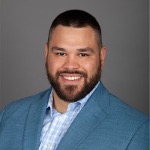
Anthony Ragosta
Class: 2015
Sales & Business Development Manager
Metromont, LLC
Poly gave me a strong foundation to skills which facilitated rapid acceleration in my career. I have advanced my career by technical expertise and problem solving rooted in a strong base of mechanics and understanding.
Read Full Story
Job Duties
Responsibilities: Pre-construction conversion from steel to precast concrete through technical support.
Poly gave me a strong foundation to skills which facilitated rapid acceleration in my career. I have advanced my career by technical expertise and problem solving rooted in a strong base of mechanics and understanding. My diverse education benefited me greatly. The construction methods and practical roots of my knowledge base from the program enabled me to lead the operations of and become an industry expert in construction methods of an advanced construction material.
How did SUNY Poly prepare you?
The breadth of my education helped with my licensure testing prep as well as ancillary facets of my career. I graduated college understanding how to learn technical concepts and with a strong base of mechanics I could build from.

Dylan Snyder
Class: 2018
Operations Manager
Atlantic Testing Laboratories, Limited
I am responsible for technical and financial oversight of two divisions within ATL. This includes
Read Full Story
Job Duties
I am responsible for technical and financial oversight of two divisions within ATL. This includes estimating, proposing on projects, technical management of specifications as they pertain to ATL's services, Project Management, people management and oversight of our lab and professional staff's certifications. I am responsible for over 35 direct/indirect reports, their career growth and development and day to day duties.
How did SUNY Poly prepare you?
SUNY Poly's CET program gave me the foundation and skills necessary for my professional career. Though I did not pursue engineering from a design perspective, I am heavily involved with construction material engineering and testing programs.

Ibtissam Bihat
Class: 2016
Assistant Professional Engineer I, Regional Local Project Liaison
New York State Department of Transportation - NYSDOT
SUNY Polytechnic Institute helped prepare me for both professional licensure and employment by providing a strong
Read Full Story
Job Duties
- Coordinating project between regional and local agencies
- Reviewing projects schedule, permits, funding and plans
- Tracking projects progress, risk and deadlines
- Ensuring compliance with environmental, right-of-way, and regulatory requirements
- Helping resolve issues between agencies, consultants, contractors, and the public
How did SUNY Poly prepare you?
SUNY Polytechnic Institute helped prepare me for both professional licensure and employment by providing a strong technical education, hands-on experience, and exposure to real-world engineering practices. The program strengthened my understanding of engineering principles, project coordination, problem-solving, and professional standards that are essential for career growth and future licensure opportunities.
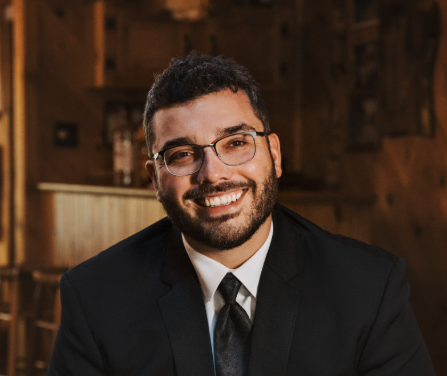
Dan Wheeler, P.E.
Class: 2017
Professional Engineer
New York State Thruway Authority
As a Professional Engineer in the Highway Design Department, my primary responsibility is to perform the complete design process for highway. The complete design process includes
Read Full Story
Job Duties
As a Professional Engineer in the Highway Design Department, my primary responsibility is to perform the complete design process for highway. The complete design process includes quantification and cost estimation of pay items for the project, as well as design of various highway features including superelevation, vertical and horizontal alignments, various sight distance calculations, safety upgrades, pavement and drainage design. As well as all the required field and CAD work to develop the appropriate design and an accurate set of contract drawings and quantities. Post design my duties extend throughout the full duration of the project including Bid Analysis and construction support.
My role requires me to apply my experience in pavement design to provide forensic analysis of pavement failures and develop proper repair solutions. I have specialized in the design of pavement repair projects, conducting extensive distress investigations to determine the underlying causes of pavement failures, along with designing appropriate repair solutions. This involves a thorough understanding of materials science and mechanics, including the use of software and analysis tools to model pavement behavior and performance.
How did SUNY Poly prepare you?
My education gave me the solid foundation required, making the transition to the real world as easy as possible.
